The Mahjong Island rules come down to one goal. Be the first player to complete one hand on the Island Card: 14 tiles that match one line on the card. The Island Card is Mahjong Island's own card of hands. The Island Card 2027 has 45 hands in 9 sections, and each month adds 3 Bonus Hands.
Each hand on the card is written as groups of identical tiles. A Pair is 2 identical tiles, a Set is 3 (called a pung in traditional mahjong), and a Quad is 4. Some lines also ask for a Single (1), a Quint (5), or a Sextet (6). Some ask for numbers in a row, like 1-2-3-4-5, as Singles.
For every hand on the card, with examples, see Mahjong Island Winning Hands.
What tiles are in the game?
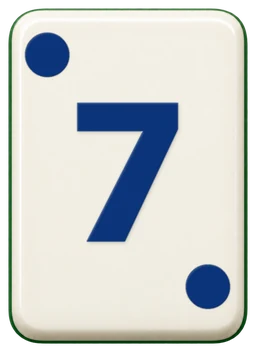
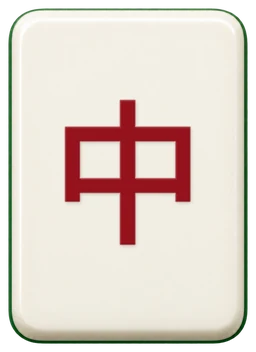
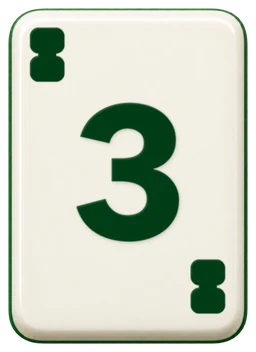
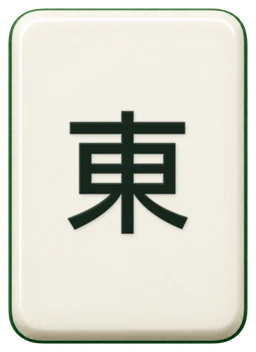
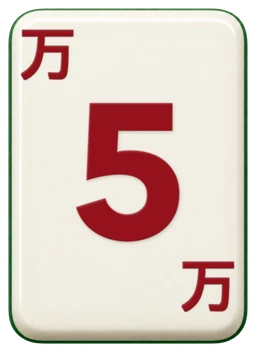
Mahjong Island plays with 152 tiles. There are three suits, Bam, Crak, and Dot, each numbered 1 to 9. There are four Winds (East, South, West, North) and three Dragons (Red, Green, and White, called Soap). There are 4 copies of each, plus 8 Flowers and 8 Jokers.
Winds and Dragons can fill groups too. For a closer look at each tile, read Mahjong Island Tiles Explained: Suits, Winds, and Dragons.
How does the deal work?
Each player is dealt 13 tiles. The dealer gets a 14th tile. The dealer discards first, once the Charleston is done.
A Mahjong Island match is 4 hands. The dealer moves around the table, so every seat deals once.
How does the Charleston work?
Before play begins, players trade tiles in the Charleston. Everyone passes 3 tiles to the right, then 3 across, then 3 to the left. Jokers are never passed.
Then comes a vote. If every player says yes, a second Charleston passes 3 left, 3 across, and 3 right. Last is the courtesy pass, 0 to 3 tiles with the player across.
What happens on your turn?
On your turn, you draw one tile from the Draw Pile, the shared stack of face-down tiles. Then you discard 1 tile into your Discards. You hold 13 tiles, draw to 14, then go back to 13. If your hand is complete after the draw, you do not discard: you Win.
When can you take a discarded tile?
You may Take Tile, picking up another player's discard, for only two reasons. One is to Win. The other is to make an Open Group, a face-up group of 3 to 6 identical tiles, that a hand on the card still allows.
A hand marked C on the card is Concealed: you cannot take a discard for it, except the winning tile.
If more than one player wants the same tile, a Win comes first. Otherwise, the player closest after the discarder gets the tile.
A Group made with a taken tile goes face up as an Open Group. After taking, you do not draw, and you discard right away. The post on drawing after taking a tile explains more.
How do Jokers work?
A Joker is wild. It can stand in for a tile in a Set, Quad, Quint, or Sextet. It can never stand in for a Single or a Pair. Every game deals 8 Jokers, each a different kind.
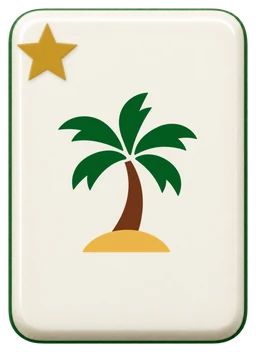
A discarded Joker is dead: nobody can take it. On your turn, you may also make a Joker swap. If an Open Group has a Joker standing for a tile you hold, trade your real tile for that Joker. Then use the Joker in your own hand.
Learn more in Mahjong Island Jokers: Rules and in the post on discarding a Joker.
How do you win a hand?
You win the moment your 14 tiles match one hand on the Island Card. You can draw the last tile yourself, which is a Self-Drawn Win. Or you can take another player's discard when it completes your hand.
Only the winner scores. To see how a winning hand is scored, read How Mahjong Island Scoring Works.
What happens if nobody wins?
If the Draw Pile runs out and nobody has won, the hand is a draw. Nobody scores that hand.
What does not win?
Only a hand on the Island Card wins: a rack of Sets and a Pair that is not a line on the card does not win.
Ready to try it? You can play a hand against 3 bots in your browser, with no sign-up. New players can also start with How to Play Mahjong Island: A Beginner's Guide.